Engineering and AI-system assurance
Engineering assurance that closes the loop.
Understand broadly.
Act narrowly.
Verify independently.
Prove precisely.
VibeSecur turns engineering and AI-system signals into governed, tested, independently verified and evidence-backed outcomes.
It is Devo AI’s flagship assurance system, offered through controlled design-partner and pilot engagements.
Map your engineering assurance gapThe assurance gap
Engineering changes continuously. Confidence cannot be a once-in-a-while report.
Modern engineering work crosses source control, CI, cloud infrastructure, security tools, runtime environments, models, agents, and data. The relevant context is distributed even when the business impact is concentrated.
VibeSecur coordinates existing systems rather than replacing source control, CI, cloud, or security platforms. Its role is to connect material signals to the governed work of deciding, acting, testing, independently verifying, and retaining evidence.
Autonomous engineering risk
More automation raises the importance of narrow authority.
- 01
Signals can arrive without enough shared context to determine their importance.
- 02
Automated action can exceed the authority intended for a particular condition or environment.
- 03
A completed task can be mistaken for a validated outcome when testing and verification are collapsed.
- 04
Evidence may be scattered after the decision, making later review difficult and slow.
Why alerts are insufficient
An alert is a beginning, not an assurance outcome.
Alerts are often necessary. They can indicate change, deviation, or a condition that needs attention.
But an alert does not establish the scope of a decision, identify an authorized response, or show whether a remediation met its intended condition.
VibeSecur is designed around the full path: context before action, tested changes, independent verification, and precise proof.
The full loop
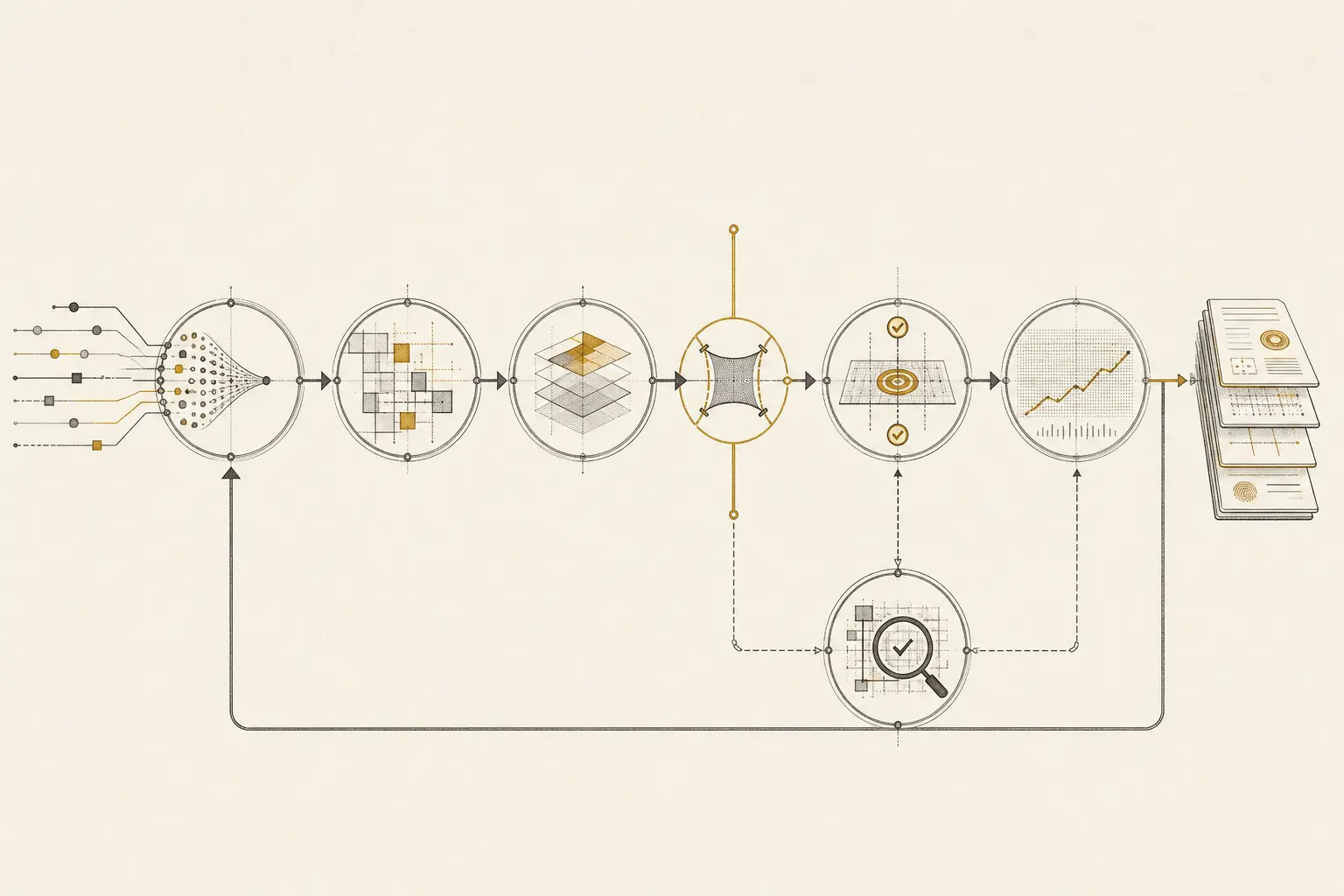
Signal through proof, in an intentional order.
Each stage has a different job. Keeping those jobs distinct helps teams move with speed without pretending that every signal deserves the same response.
- 01
Signal
Collect material signals across engineering, AI systems, and operations.
- 02
Triage
Prioritize what matters by risk, timing, scope, and consequence.
- 03
Investigate
Build context before deciding what authority is appropriate.
- 04
Plan
Define the response, owners, and constraints in view.
- 05
Remediate
Make the controlled change with accountable authority.
- 06
Test
Validate the intended outcome across relevant controls.
- 07
Verify
Independently assess what the evidence says happened.
- 08
Prove
Retain precise evidence of what was done and why.
Broad understanding, narrow authority
Context can be expansive. Permission should be deliberate.
VibeSecur is designed to correlate the signals relevant to a decision without converting broad visibility into broad power. What a system can observe and what it can change should remain separate questions.
Controlled remediation can be routed through the appropriate human authority and existing operating processes. This is especially important when a change reaches production, affects a model or agent behavior, or could carry material business consequences.
Independent verification and evidence
Testing asks whether a change behaves as expected. Verification assesses the outcome against independent evidence.
VibeSecur treats evidence as a first-class part of the workflow: what was observed, why a response was considered, what was authorized, what was tested, and what can be supported on review.
It is not a certification scheme. The system’s purpose is to make governed work and its evidence more legible; any certification, attestation, or external assurance decision remains separate and must be independently authorized.
Five assurance pillars
A common loop across different technical conditions.
- 01
Change Assurance
Bring the decision trail and expected outcome around consequential change into view.
- 02
Continuous Compliance
Connect operating evidence to continuous control awareness without representing a certification.
- 03
AI Agent & Model Assurance
Evaluate model and agent behavior in a governed operating context.
- 04
DevSecOps & Software Supply Chain
Follow relevant signals and controls across the systems that build and deliver software.
- 05
Runtime & Data Assurance
Maintain an evidence-aware view as systems operate and data conditions change.
Workflow placement
Work with the systems teams already trust for their specific jobs.
- 01Existing systems
- 02VibeSecur context
- 03Governed action
- 04Test and verify
- 05Evidence
The workflow is an operating pattern, not a claim that every system, connector, or deployment model is available in every engagement.
Deployment and trust considerations
Assurance should meet the conditions of the environment it enters.
Engagements are scoped around the systems, controls, data boundaries, owners, and verification expectations that are appropriate to the situation. Deployment patterns and integrations are considered conditionally rather than presumed.
Human authority, change control, and evidence handling remain central to the engagement design. We do not represent a universal deployment path or a pre-approved integration surface.
Leadership outcomes
Better questions before costly decisions become harder to reverse.
For engineering leaders: clearer context around consequential change and where it sits in the wider system.
For security and risk leaders: controlled authority and evidence-aware operating work rather than isolated alert volume.
For company leaders: a more legible path from material signal to decision, outcome, and learning.
Engagement model
Designed for close, controlled work.
VibeSecur is currently available through controlled design-partner and pilot engagements. The first conversation is used to map an assurance gap, identify the operating context, and determine whether a focused working session is appropriate.
Start a practical conversation